


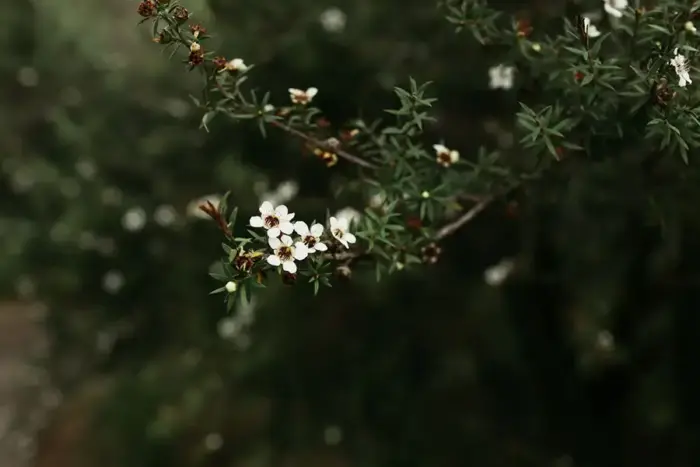
Mānuka in flower, a winter workhorse that handles poor soils, coastal exposure, and heavy clay while providing a vital nectar source for bees.
Winter in Northland is mild by New Zealand standards, but it still has a way of making gardens feel quiet. The flush of summer growth is long gone, the days are shorter, and a lot of gardeners find themselves waiting for spring. What many don’t realise is that some of New Zealand’s most rewarding native plants do their best work right now, putting on a display of colour and fragrance precisely when the rest of the garden has gone to sleep.
Growing winter-flowering natives does more than keep your garden interesting through the cooler months. If you’re working with a blank canvas or rethinking an established garden, a considered landscape design makes all the difference to how these plants perform together over time. The blooms arrive at a time when nectar and pollen are scarce, making them genuinely valuable to the tūī, waxeyes, and bees that are still active through Northland winters. A garden that flowers in July and August is doing ecological work that a summer garden, however beautiful, simply cannot replicate.
Here are four native plants that earn their place in a Northland winter garden.
Mānuka (Leptospermum scoparium)
Mānuka is one of the hardest-working plants in the New Zealand native garden, and in Northland it often starts flowering as early as late July. The flowers are small (white in the straight species, though cultivated forms come in deep pink, red, and soft blush) and they appear in such abundance that a mature plant in full bloom looks like it’s been dusted with snow. Up close, there’s a light honey scent that bees find irresistible, and a flowering mānuka will attract more activity than almost anything else in a winter garden.
In Northland’s climate, mānuka is exceptionally easy to grow. It handles poor soils, coastal exposure, and the heavy clay conditions common throughout the Whangarei district without complaint. It does best in full sun and resents waterlogged roots, so avoid planting it in low-lying spots that sit wet through winter. Left to its own devices it becomes a rangy shrub of three to four metres, but it responds well to a light prune after flowering, which keeps it dense and encourages heavier bloom the following year. The compact and weeping cultivars are particularly useful in smaller gardens where the full-sized species would quickly take over.
Hebe (Veronica species)
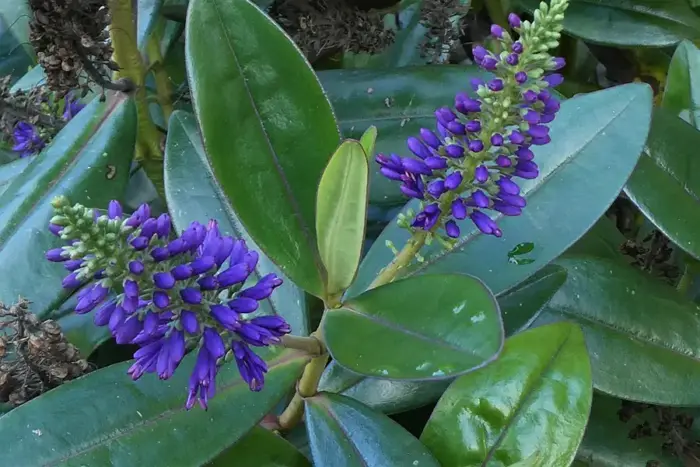
Deep violet hebe flowers in full bloom, one of the most versatile and underrated plants in the Northland winter garden.
Hebes are among the most versatile plants in the NZ native palette, and the winter-flowering varieties are genuinely underused in Northland gardens. Depending on the species and cultivar, flowers appear in white, soft pink, purple, and deep violet, held in neat spikes that emerge straight from the foliage and last for weeks. Many varieties also produce a second flush in spring, which extends their value considerably.
What makes hebes particularly useful in a winter garden is their tidiness. They’re evergreen, hold their shape well without regular pruning, and work equally well as a low border, a container specimen, or a mid-border plant among taller shrubs. Look for varieties bred or selected for humidity tolerance, as some of the larger-leaved hebes can be prone to fungal issues in a wet winter if airflow around them is restricted. Smaller-leaved varieties like Hebe ‘Wiri Mist’ and Hebe diosmifolia are reliably tough performers in Northland conditions, while Hebe speciosa is a good large-leaved option where a bolder look suits the planting. Planting in full sun with good drainage and leaving space around each plant goes a long way towards keeping them healthy through the wetter months.
Olearia macrodonta (Mountain Daisy Bush)
Olearia macrodonta is less commonly planted than mānuka or hebe, which is a shame because it’s a striking plant that fills a gap few others can. It’s a large evergreen shrub with bold, holly-like leaves (glossy on top, white and felted underneath) that make it worth growing for foliage alone. In late winter to early spring it produces clusters of white daisy flowers with yellow centres, and when a mature plant is in full bloom it stops people in their tracks.
In Northland it performs well in coastal and exposed positions, which makes it genuinely useful for the many properties in the region that sit in wind-prone spots where more tender plants struggle. It grows fairly quickly and can reach two to three metres, so it earns its keep as a privacy screen or shelter plant as well as an ornamental. It tolerates most well-drained soils and is drought-hardy once established. The one thing it dislikes is poor drainage. Like most of New Zealand’s native shrubs, sitting in wet clay through winter will eventually cause problems. If your soil is heavy, plant it on a slight mound or in a raised bed to keep the roots clear of standing water.
Kōwhai (Sophora chathamica)
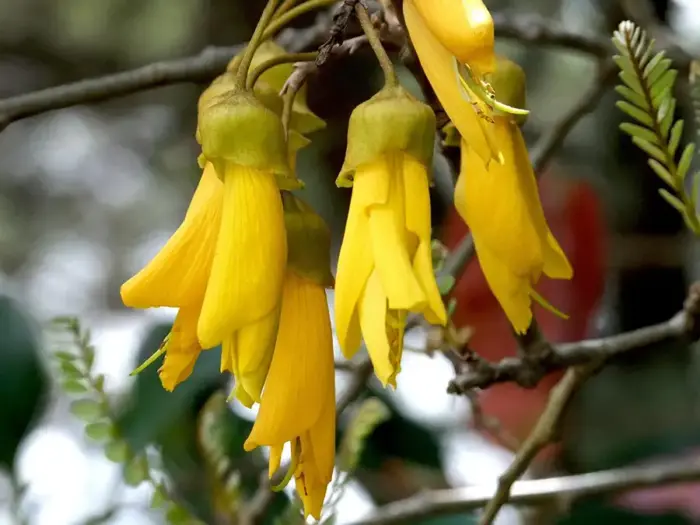
The golden pendant flowers of kōwhai are a magnet for tūī through late winter, making it one of the most rewarding native trees you can plant in a Northland garden.
Kōwhai is technically a late-winter and early-spring flowerer, but in Northland’s mild climate the first flowers often appear in August, well before gardens further south see anything. That mild-winter advantage is one of the genuine pleasures of gardening in this region, and kōwhai makes the most of it. The flowers are the showstopper: long, tubular, and a deep golden yellow that is almost impossible to ignore, hanging in pendant clusters before the new season’s foliage fully emerges.
They are also a critical food source. Tūī in particular are highly attuned to kōwhai flowering times and will travel considerable distances to reach a tree in bloom. If you want tūī in your Northland garden reliably through late winter, a kōwhai is probably the single best plant you can put in. Sophora chathamica (Coastal Kōwhai) is the species naturally at home in Northland and coastal northern New Zealand, and it is the better choice for gardens in our region over the more commonly sold Sophora microphylla. It has no awkward juvenile divaricating stage, tends to flower earlier in its life, and grows into a tidy, upright small tree of around six metres. It performs well in coastal positions and tolerates wind and dry conditions once established. Plant it in full sun with good drainage, and resist the urge to over-fertilise. A lean soil encourages better flowering than a rich one.
Non-Native Winter-Flowering Plants Worth Considering
Not every plant that earns a place in a Northland winter garden needs to be a native. Several introduced species flower reliably through the cooler months and bring a scale and presence that complements the more delicate native blooms.
Camellias are a staple of the New Zealand winter garden for good reason. They flower prolifically from late autumn through to spring, are tolerant of Northland’s humidity, and come in an enormous range of forms and colours from single whites through to full, formal doubles in deep crimson and coral pink. They grow well in dappled shade or morning sun, prefer a slightly acidic, well-drained soil, and respond well to a light shaping after flowering.
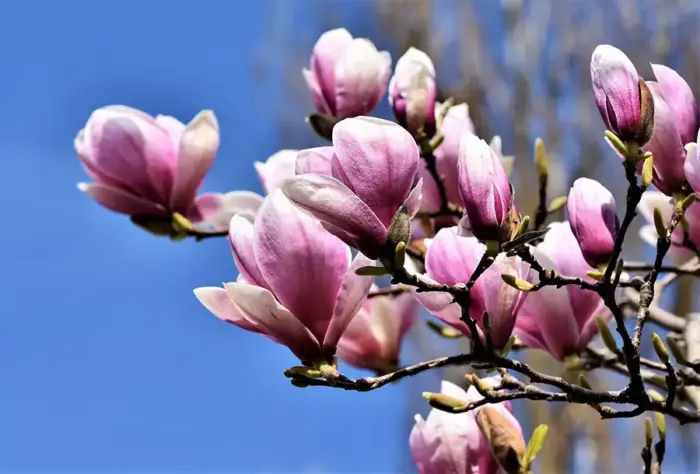
Few winter-flowering trees match the impact of a magnolia in full bloom, producing large goblet-shaped flowers before a single leaf has appeared.
Magnolias are among the most spectacular winter-flowering trees available in New Zealand, producing large, goblet-shaped flowers in white, cream, pink, and deep rose before the foliage emerges. In Northland’s mild winters they often begin flowering in late July, and a mature tree in full bloom is genuinely arresting. They prefer a well-drained, slightly acidic soil with shelter from strong winds, which protects the flowers from browning prematurely.
Gordonia is less widely known but well worth seeking out. It’s an evergreen large shrub or small tree with glossy foliage and white, camellia-like flowers that appear through autumn and winter. It performs well in Northland’s climate, tolerates humidity, and suits a similar position to camellias: good drainage, slightly acidic soil, and shelter from the harshest winds. If you’re not familiar with it, it’s worth asking your local nursery to source one.
Getting the Most from Winter-Flowering Natives
These four plants are all reasonably unfussy once established, but a few habits at planting time will set them up well for the long run.
Drainage is the single most important factor for all of them. None of these plants wants to sit in wet soil through winter, and in Northland’s clay-heavy landscapes that can take some active management. Where drainage is poor, amending the soil with grit and compost before planting, or building a slightly raised or mounded bed, will make a meaningful difference to how well the plants establish and perform. It is far easier to sort drainage before planting than to try and rescue a struggling plant later.
Mulching around the root zone after planting helps in two ways. It retains soil moisture during Northland’s dry summer periods and suppresses the weeds that compete most aggressively with young plants before they’ve had a chance to get established. A layer of bark mulch about 75mm thick works well. Keep it pulled back slightly from the base of each plant so moisture isn’t sitting directly against the stem, which can cause rot over time.
Pruning timing matters more than most gardeners realise. All four of these plants set next season’s flower buds shortly after the current season’s flowers finish, so pruning before flowering removes buds that haven’t opened yet and reduces the following year’s display. Prune after flowering instead, when you can see exactly where the plant has finished and where healthy new growth is emerging. With mānuka in particular, avoid cutting back into bare old wood as it doesn’t regenerate reliably from stems that have lost their foliage.
Where space allows, planting in groups rather than as single specimens is worth considering. Three mānuka planted together rather than one create a genuinely arresting winter display and provide a far more significant food source for the tūī, waxeyes, and native bees that depend on winter-flowering plants to get through the colder months. The same logic applies to hebes along a border. Mass plantings of a single variety read far more confidently in a garden than scattered individuals, and the wildlife value increases proportionally.
If you’d like help choosing the right winter-flowering natives for your property or incorporating them into a broader planting design, the team at PlantPro & Sons is happy to talk it through. Get in touch here.