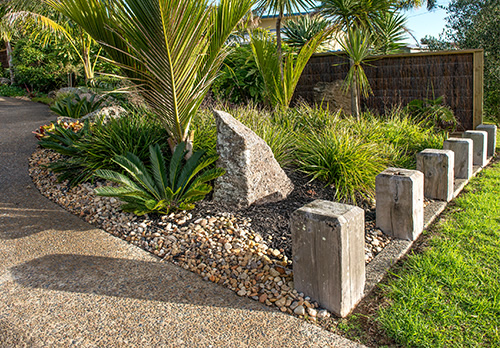



 Northland summers are stunning, until your new garden tells a different story. Long dry spells, salty coastal wind, and free-draining soil can turn a new plant brown by February.
At Plantpro & Sons, we’ve spent 30 years working with Northland’s soil and conditions. We know which natives actually earn their place in a garden, and which ones just look good at the garden centre. Our guide runs through the best native plants for Northland summers. If you’re planning around an outdoor entertaining area too, our summer entertaining area ideas guide is worth a read.
Why Northland Summers Are Hard on the Wrong Plants
Northland regions like Waipu, Mangawhai, and Ruakaka sit right on the coast, enduring salt-laden wind on top of weeks without rain. While Kerikeri is more sheltered and humid, the dry spells still arrive by January.
Add sandy, free-draining soil into the mix and water disappears fast. Naturally evolved native plants for dry conditions in NZ handle it far better than anything shipped in from a milder climate.
Native Flowering Shrubs for Colour All Summer
If you’re after the best native plants for summer colour, these are the native flowering shrubs that NZ gardens rely on, each flowering at a different time so you get a good show right through summer.
Pōhutukawa
Flowers from November through to January, right on cue for Christmas. This proper coastal tree is built for full sun and salt spray, and is native to Northland specifically. Pōhutukawa species range from beautiful flowering trees with ruby blossoms (Metrosideros excelsa) to compact, flowering shrubs that make great amenity plants (Metrosideros tahiti). The Metrosideros “Māori Princess” is a stunning popular choice as a specimen tree in Northland.
Hebe
Coastal hebe flowers almost all year round in shades of purple and magenta, and thrives on exposed cliffs where little else survives. A wild population still grows near Maunganui Bluff and Hokianga Harbour, right here in Northland. There are hundreds of hebe species to suit the conditions in your garden, from textural native hebe stricta (koromiko) to popular, flowering amenity options like hebe wiri or diosmifolia.
Harakeke (Flax)
Harakeke (Phormium) is a low-maintenance, hardy native, as it tolerates any ground conditions, making it perfect for revegetation planting or roadside shelter belts. Tall flower stalks appear from around September through to November, with red-orange tubular flowers that tui and bellbirds go straight for. It’s not fussy about soil, and shrugs off wind, salt, and drought, making it one of the easiest natives to care for.
Phormium tenax is the most common harakeke, also known as swamp flax, and can grow 2m tall, whereas Phormium cookianum (dwarf mountain flax) is perfect for attracting birds and bees in your garden with its bright yellow flowers.
Corokia
Corokia, or korokio, has small yellow star-shaped flowers that show from September through to as late as April, followed by berries later on. It grows naturally on some of Northland’s most exposed coastline, including Cape Reinga and the Surville Cliffs. Another native with hundreds of variants, corokia is the perfect native to add texture and structure to your flowering garden.
Poor Knights Lily
Xeronema callistemon, known as Poor Knights Lily, is a stunning textural plant endemic to Northland, known for its bright red bottlebrush-shaped flowers and lime green foliage. Perfect for harsh coastal conditions, Xeronema grows perched on rocks and stony ground and needs almost no watering.
Renga Renga Lily
Arthropodium cirratum, or renga renga lily, is a popular choice in native gardens in Northland for its lush green foliage and stunning array of white flowers that appear in November each year. Renga renga lilies look the best when mass-planted in shady areas, or underplanted beneath specimen trees.
Hardy Native Plants for Full Sun and Dry Conditions
Some sections don’t just get hot; they get baked with full sun most of the day, with nothing around to soften the wind. These hardy native plants for hot summers are built exactly for that.
Taupata/Coprosma
As one of New Zealand’s most popular amenity shrubs, taupata, or Coprosma repens, has glossy leaves which shrug off full sun, salt spray, and drought without missing a beat. It flowers quietly from June through to February. Then, it carries a steady show of orange-red berries most of the year. Coprosma is a highly versatile shrub that can work as a hardy groundcover, lush hedge, or garden shrub.
NZ Ice Plant (Horokaka)
Horokaka is about as drought-tolerant as native plants for full sun in NZ get. It’s a succulent that stores water and flowers with small pink-to-purple, daisy-like blooms nearly year-round. In the wild, it grows straight out of coastal rock and cliff faces.
Mānuka/Leptospermum Scoparium
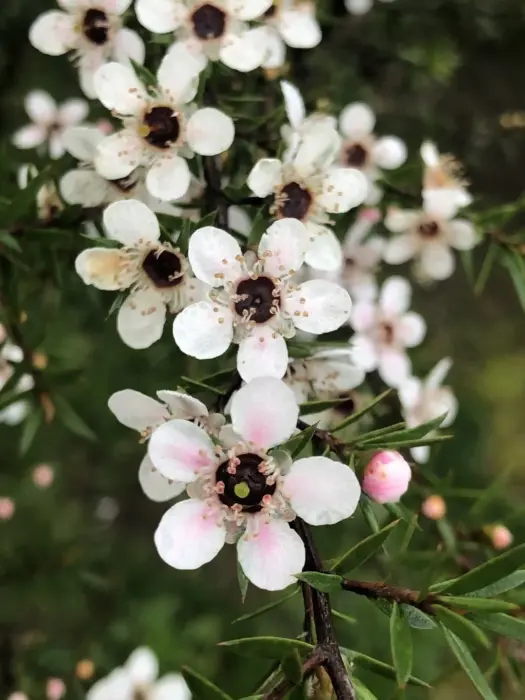
White or pink flowers can turn up almost any time of year. The mānuka plant ranges naturally from coast to alpine country, which says everything you need to know about hardy NZ natives for gardens across Waipu, Mangawhai, or Ruakaka. Coloured mānuka are becoming increasingly popular in NZ gardens, especially prostrate and ground cover variants with gorgeous red, pink, or white cascades of flowers that bees love.
Put the plants above together, and you’ve already got the best natives for coastal Northland gardens, handling windy conditions, sandy soil, and long dry spells with ease.
How to Plant Natives That Actually Survive Their First Northland Summer
Even the hardiest NZ natives for warm climates struggle if you plant them the wrong way.
Right Plant, Right Spot
Match the plant to the spot, not what looks good in a pot at the garden centre. A plant bred for a sheltered corner won’t cope with a north-facing bank in full sun from 7 am. If your section is steep in addition to being sunny, we’re experienced in hard landscaping for sloped sections.
Water and Mulch While It Settles in
Water deeply but not often while roots establish, usually the first 6 to 12 months. Mulch helps too, holding moisture in and keeping soil temperature down over summer.
Ask If You’re Not Sure
Plantpro & Sons has worked with Northland’s soil and conditions for 30 years, so if you’re stuck, talk to our team. Take a look at our planting services in Northland to see how we can help.
Frequently Asked Questions
What native plants flower all summer in Northland?
Coastal hebe and mānuka both flower for most of the year. They’re your best bet for colour that doesn’t stop over summer.
Do native plants need watering once they’re established?
Not much, once they’re established. Mānuka, xeronema, and corokia are classic drought-tolerant native plants in New Zealand that only need extra water during extended dry spells after their first summer.
What native plants cope best with salt wind on the coast?
Taupata, corokia, and pōhutukawa all grow naturally on exposed Northland coastline. Salt wind is exactly the condition they’re built for.
Ready to Plant for a Successful Northland Summer?
Picking survivable plants for the Northland summer heat is one thing. Getting them placed right, so your whole garden works together through summer and beyond, is another. We know Northland’s soil, wind and coastline inside out, from Waipu and Mangawhai to Kerikeri.
If you’d like a hand with landscape design in Northland, contact the team at Plantpro & Sons.