


 You’ve spent thousands on the perfect outdoor furniture set, installed that sleek BBQ, maybe even added some fairy lights for ambiance. But when you actually host people, you find yourself making endless trips between the kitchen and the deck, while half your guests crowd into the one sliver of shade and the other half bake in the afternoon sun. By the time you sit down to eat, you’re exhausted and the food’s gone cold.
Sound familiar? The truth is, most outdoor spaces are designed to look good in photos, not to actually work when you’re hosting eight people for Sunday lunch or trying to keep the kids entertained while you prep dinner.
After years of designing outdoor entertaining areas across Northland, we’ve learned that the difference between spaces people love to use and ones that just look pretty comes down to a handful of principles that most homeowners never consider. Get these right from the start, and entertaining becomes effortless. Get them wrong, and you’ll be fighting your own backyard every time you have people over.
What Makes a Great Summer Entertaining Area?
The great ones always nail three things: kitchen connection, weather protection, and flexible seating zones.
Your outdoor dining area should be no more than 6-8 steps from your kitchen door. Any further and you’ll spend the whole barbecue shuttling plates and forgetting the salad. We’ve seen too many beautiful decks positioned for the view rather than convenience, leaving hosts exhausted before guests even sit down.
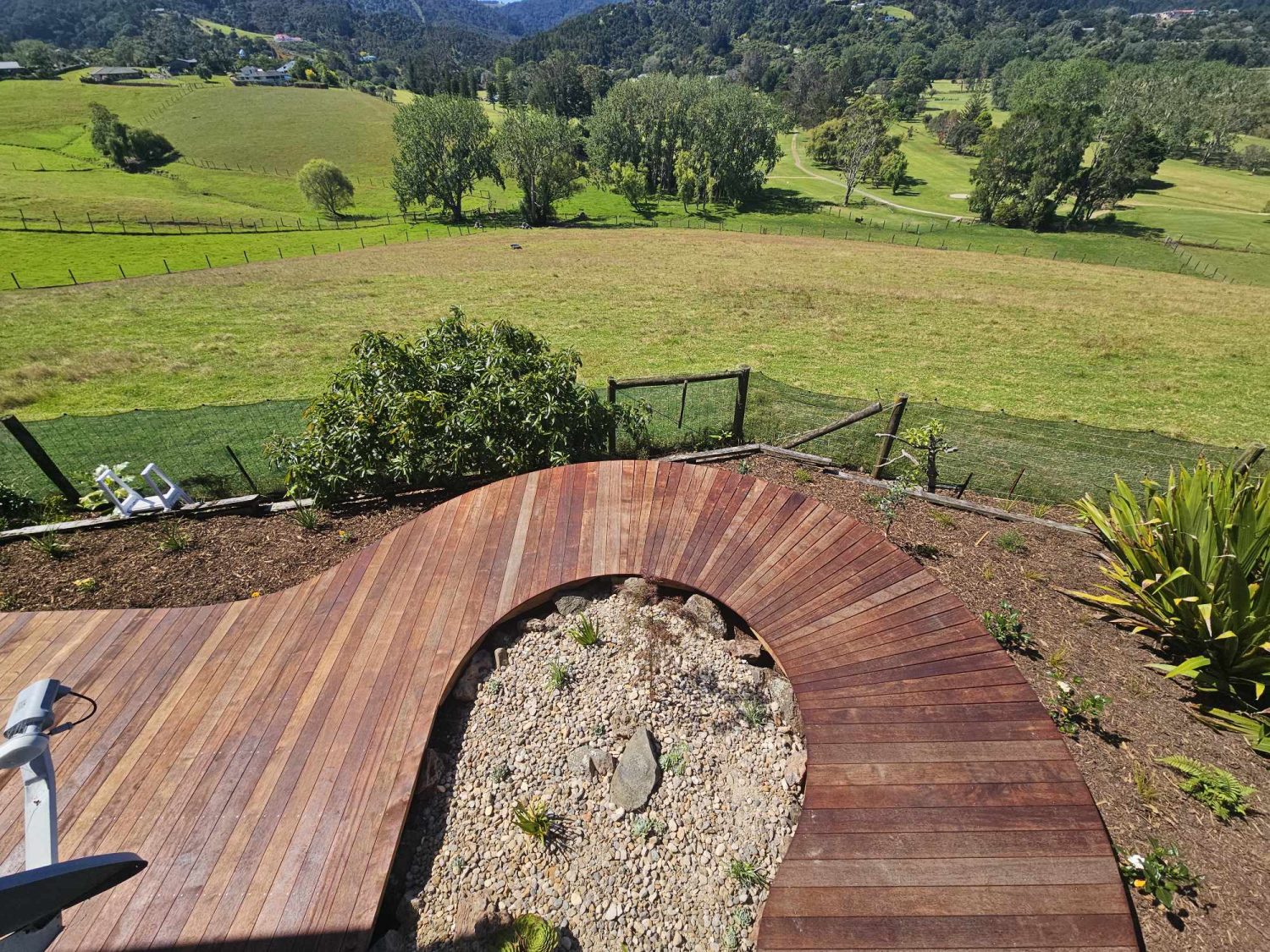
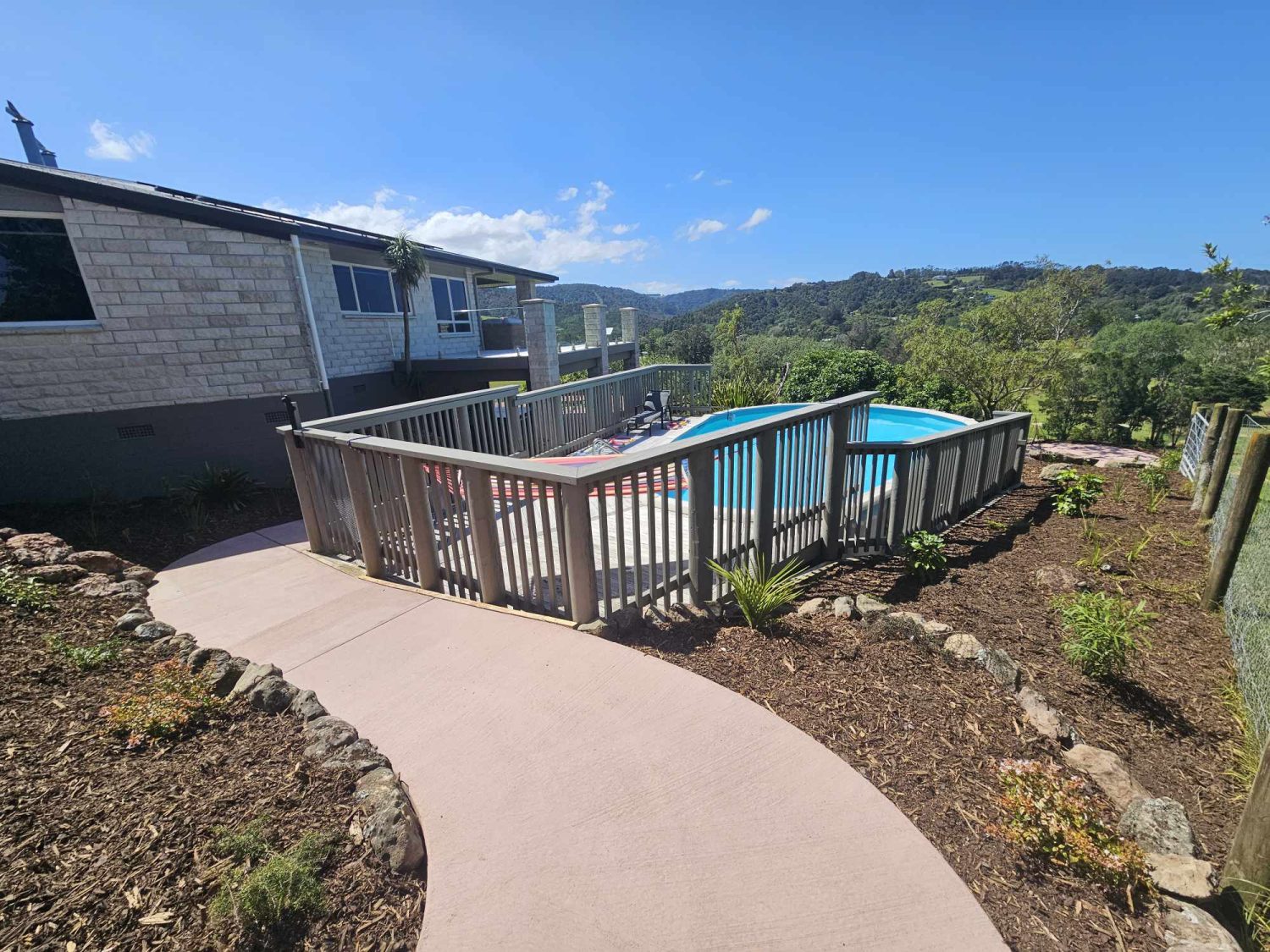
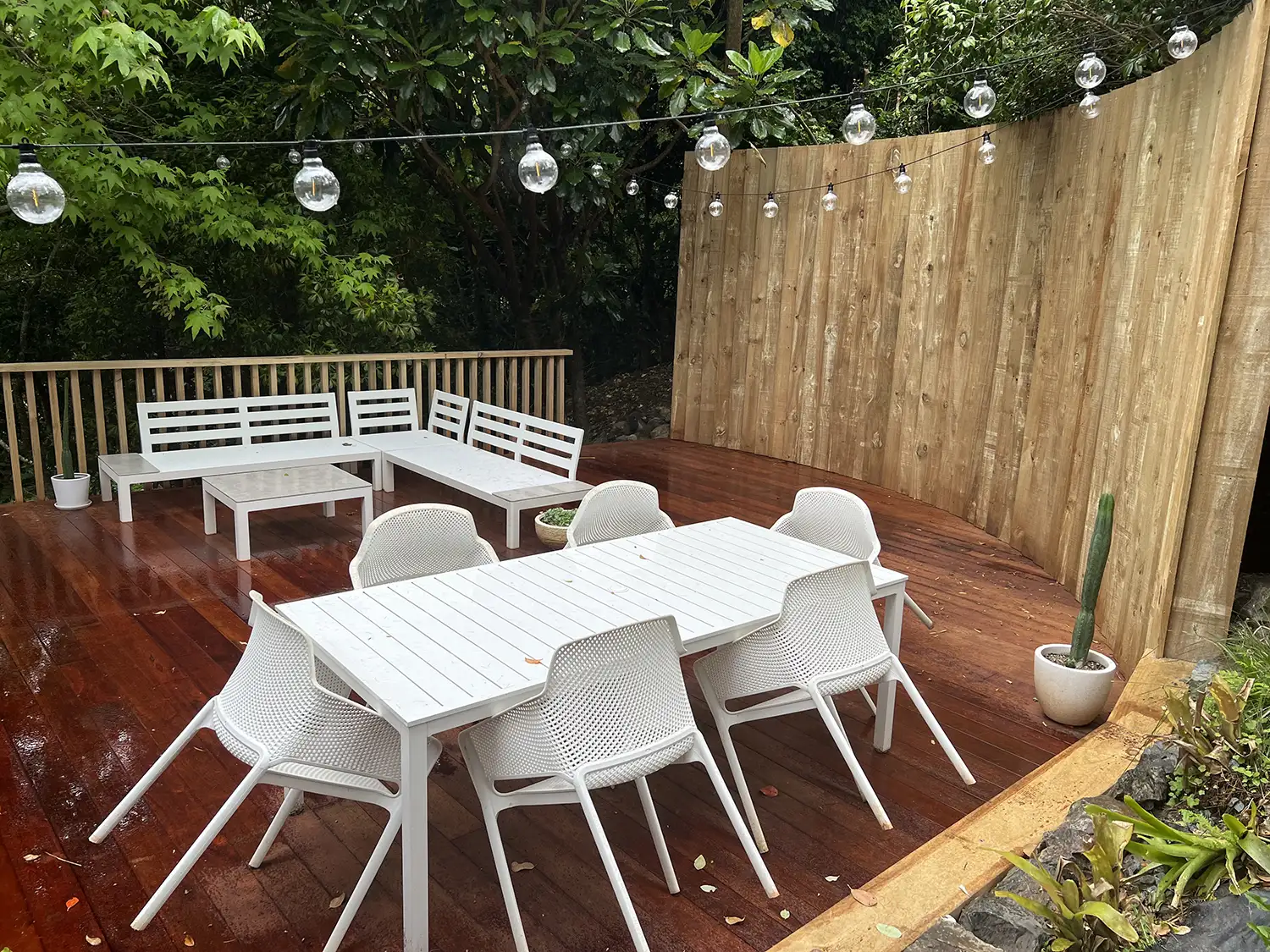
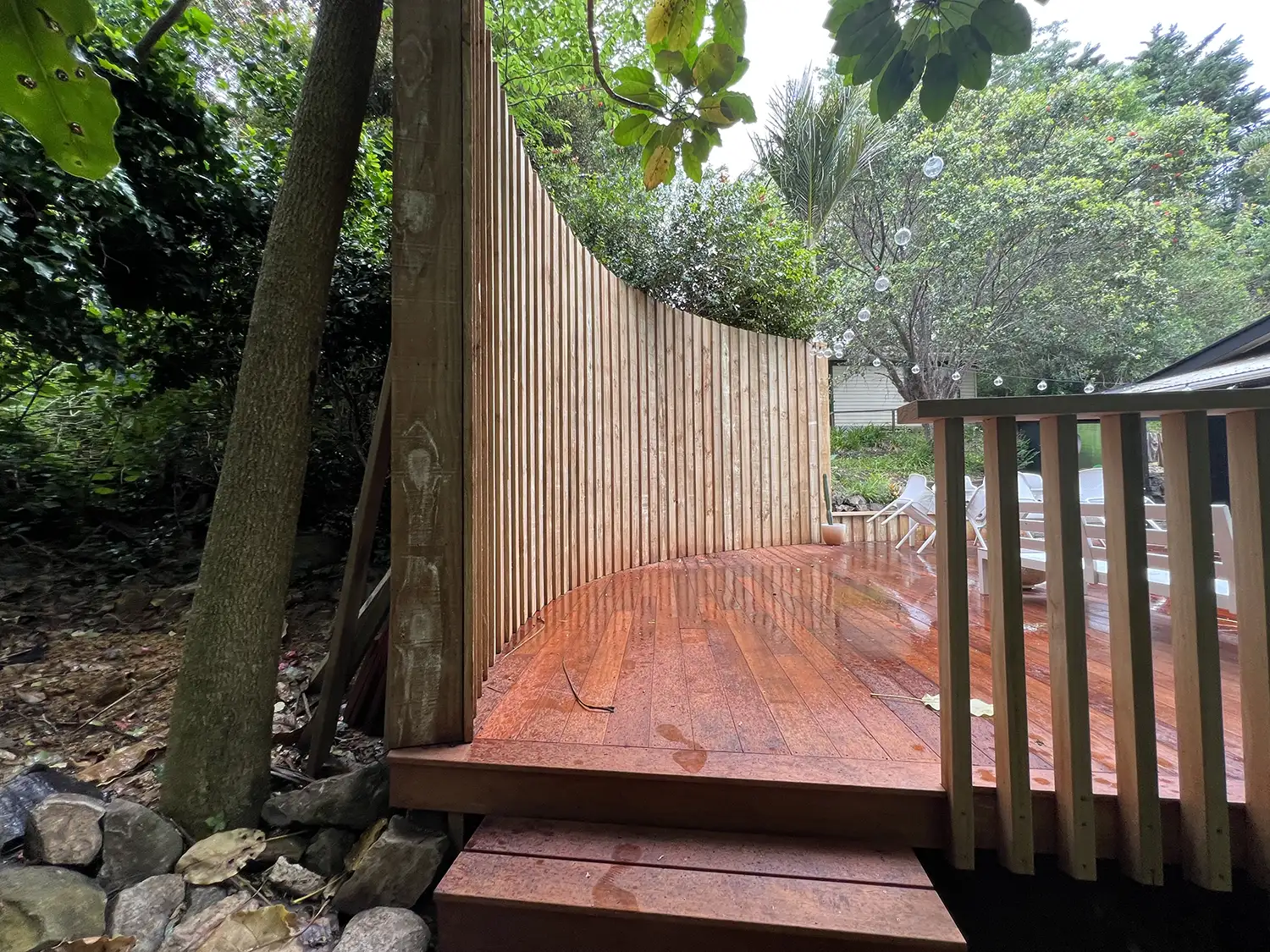
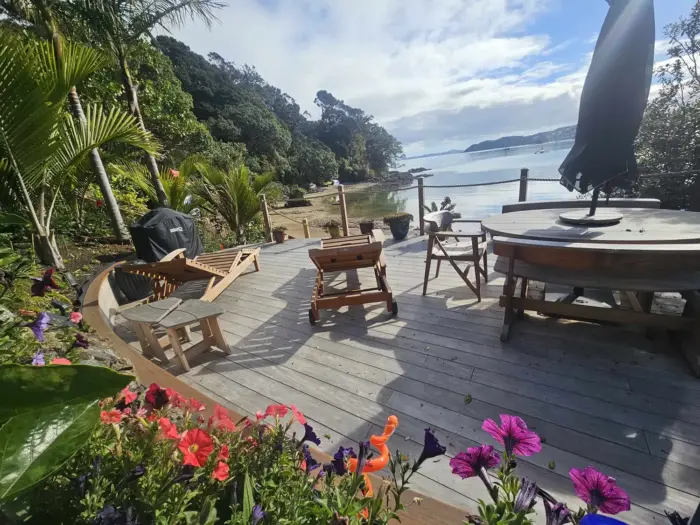
Take our Tamaterau project as an example. We designed a deck that dramatically extended the living area of the house, solving the existing backyard problems in one move. The deck fitted perfectly within the surrounding physical constraints of the site. The standout feature was a dramatically tall curved wall that provided both an audio and visual barrier from the road, creating a sense of seclusion and privacy. Built with high-quality hardwood timber, it’s a space that will actually improve with age rather than deteriorate: exactly the kind of long-term thinking that makes outdoor areas worth the investment.
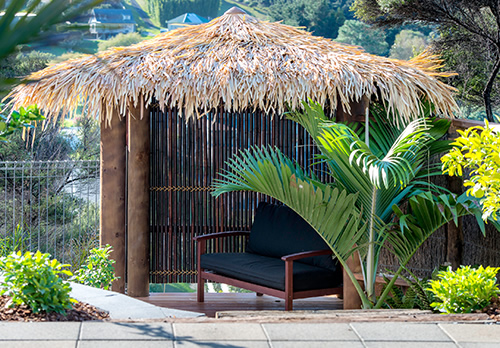
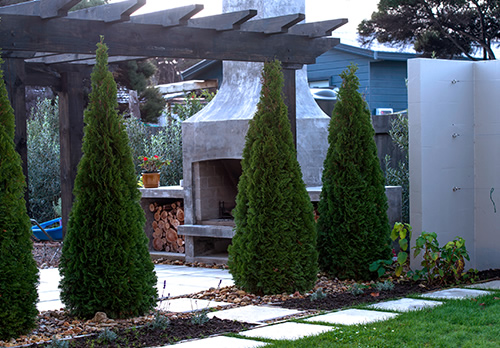
Weather protection is non-negotiable in Northland. That means planning for both our intense summer sun and those sudden afternoon breezes that can turn a lovely lunch into a napkin-chasing disaster. A pergola or shade sail positioned to block the 2pm sun, combined with some strategic planting for wind shelter, keeps everyone comfortable. In our region, understanding the prevailing weather conditions on your specific site is crucial—what works on a sheltered town section won’t necessarily work on an exposed coastal property.
The flexible seating is where most people get it wrong. Instead of one big dining table that seats twelve but feels empty for four, we design zones that work for different group sizes. A main dining area that comfortably seats six to eight, with additional casual seating nearby that can be pulled in when needed.
How Do You Create Flow Between Indoor and Outdoor Spaces?
This is the most common mistake we see in Northland properties—homeowners underestimate how crucial indoor-outdoor flow is to actually using their outdoor space. It’s not just about having a door that opens onto a deck. It’s about creating a connection so natural that moving between spaces feels effortless.
Creating flow starts with layout. Doors, decks, and pathways should be positioned so people move naturally from the house into the garden without disruption. A clear connection makes entertaining feel seamless and encourages guests to use the whole space.
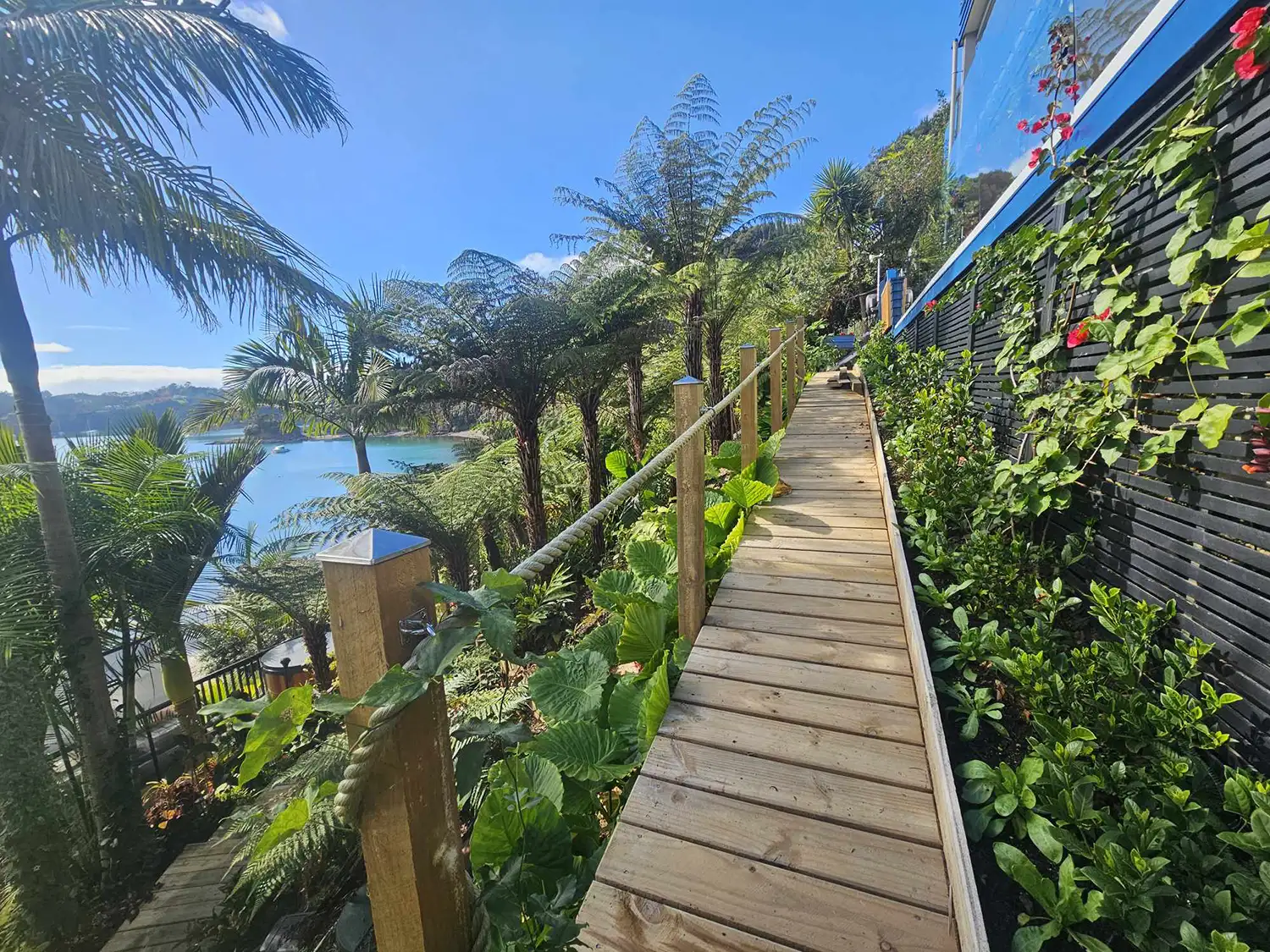
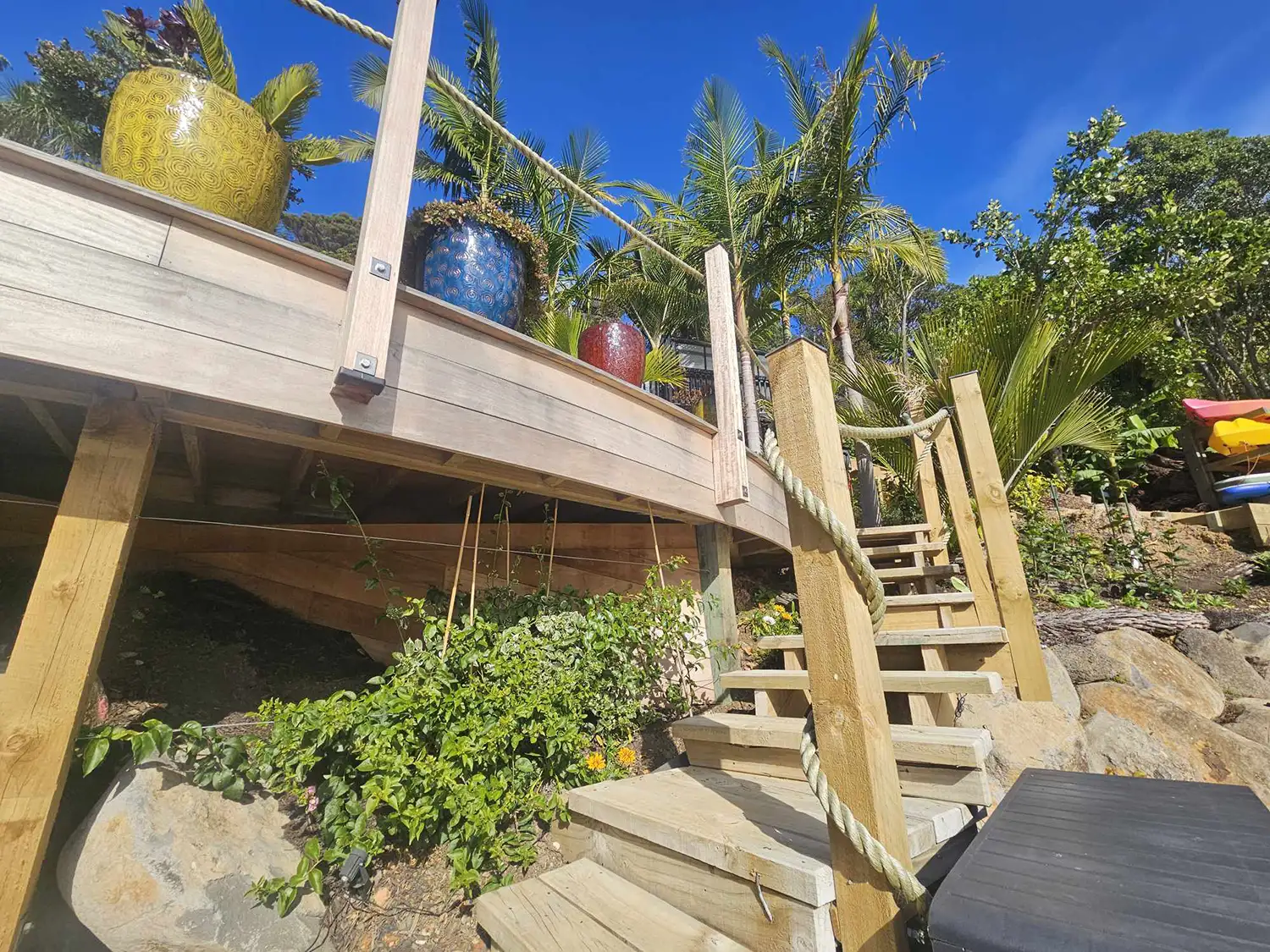
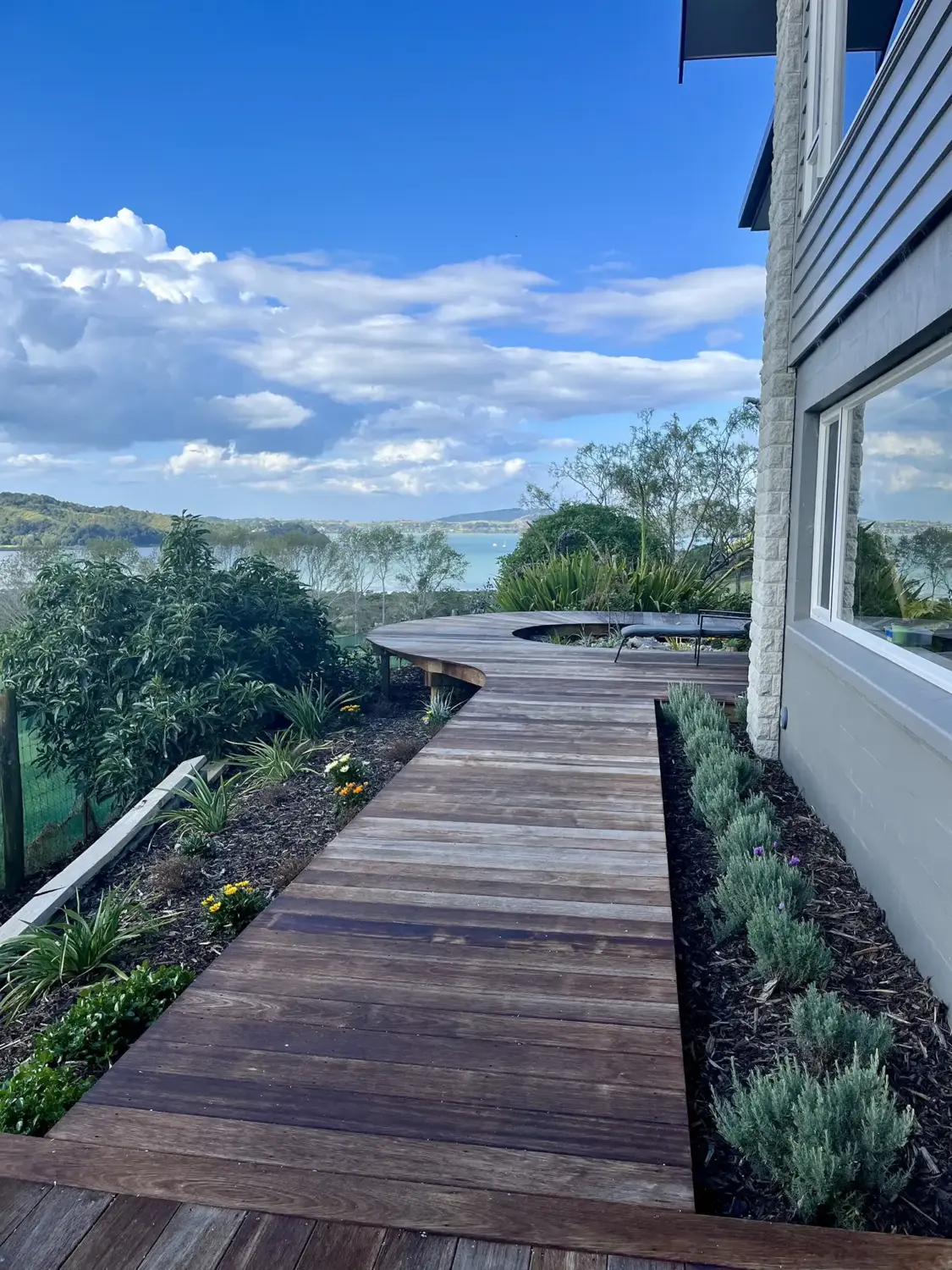
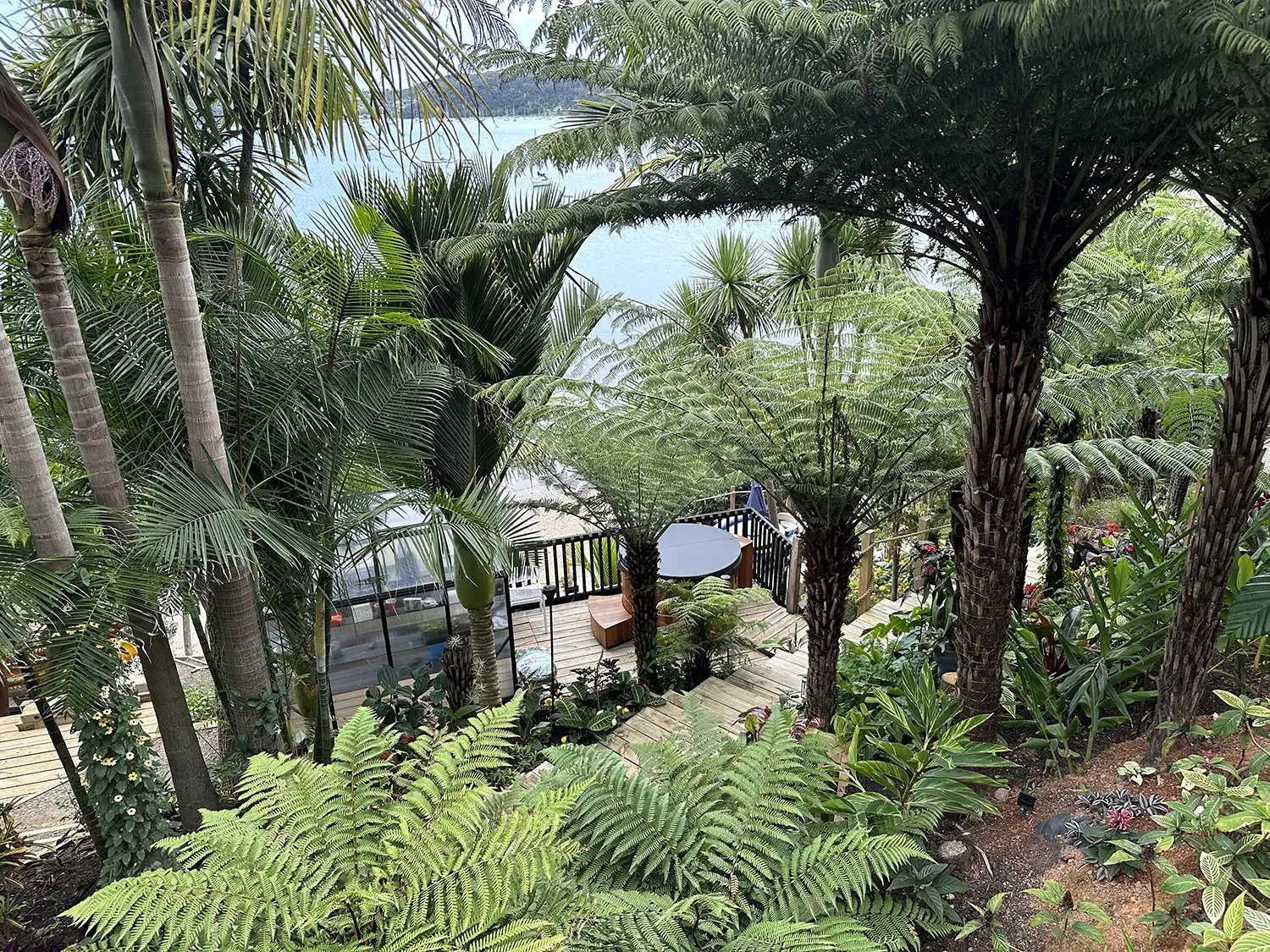
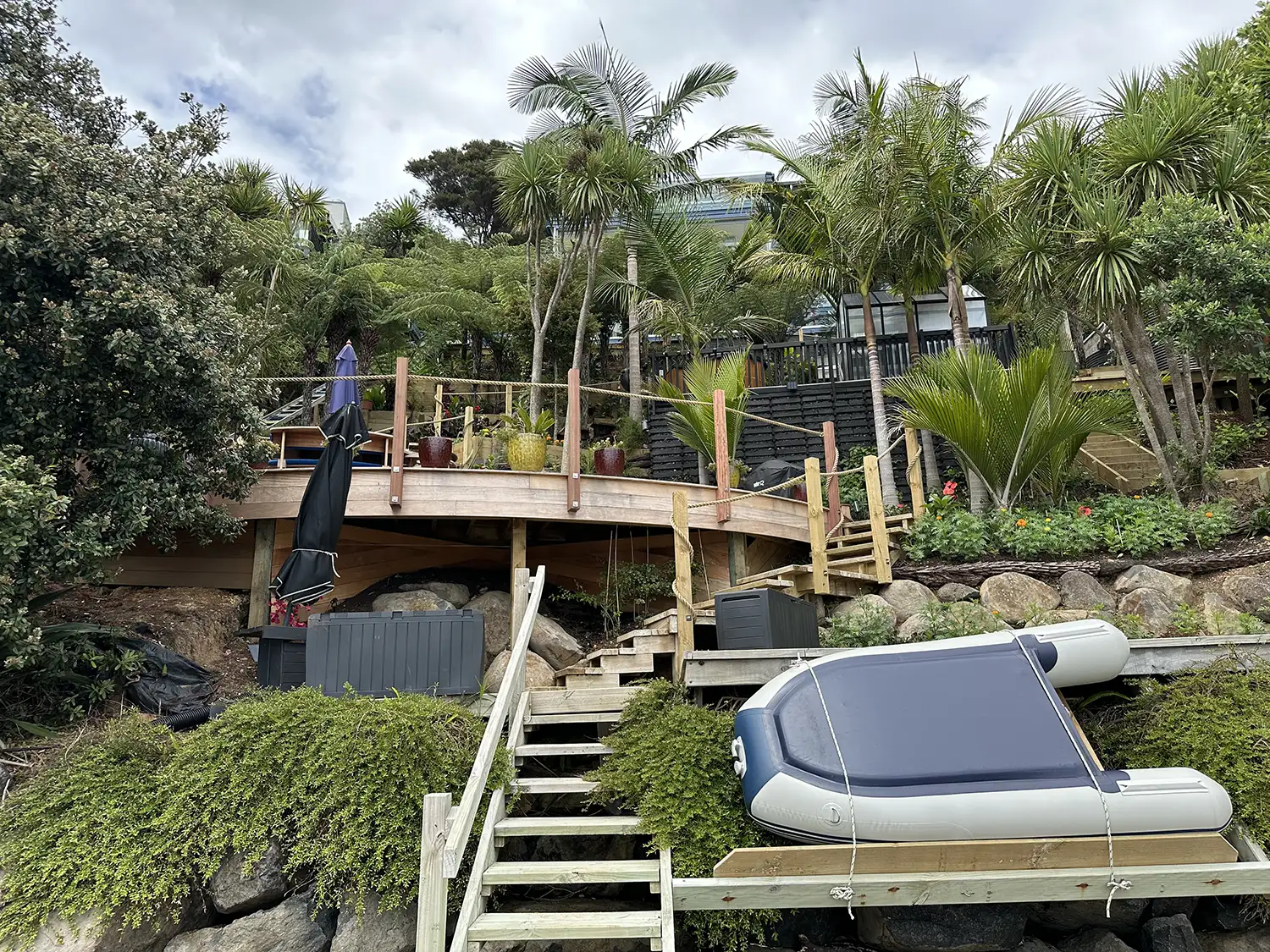
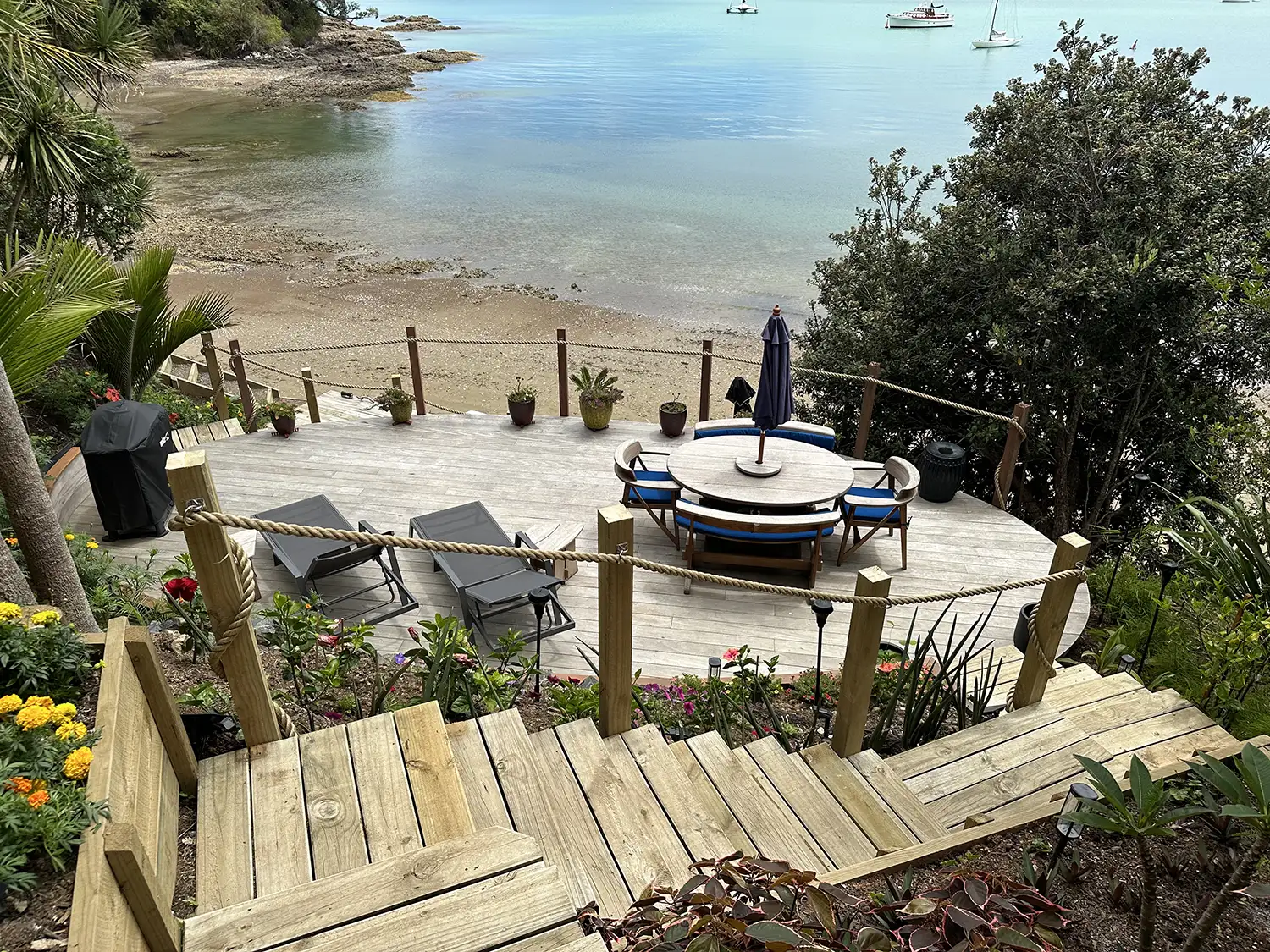
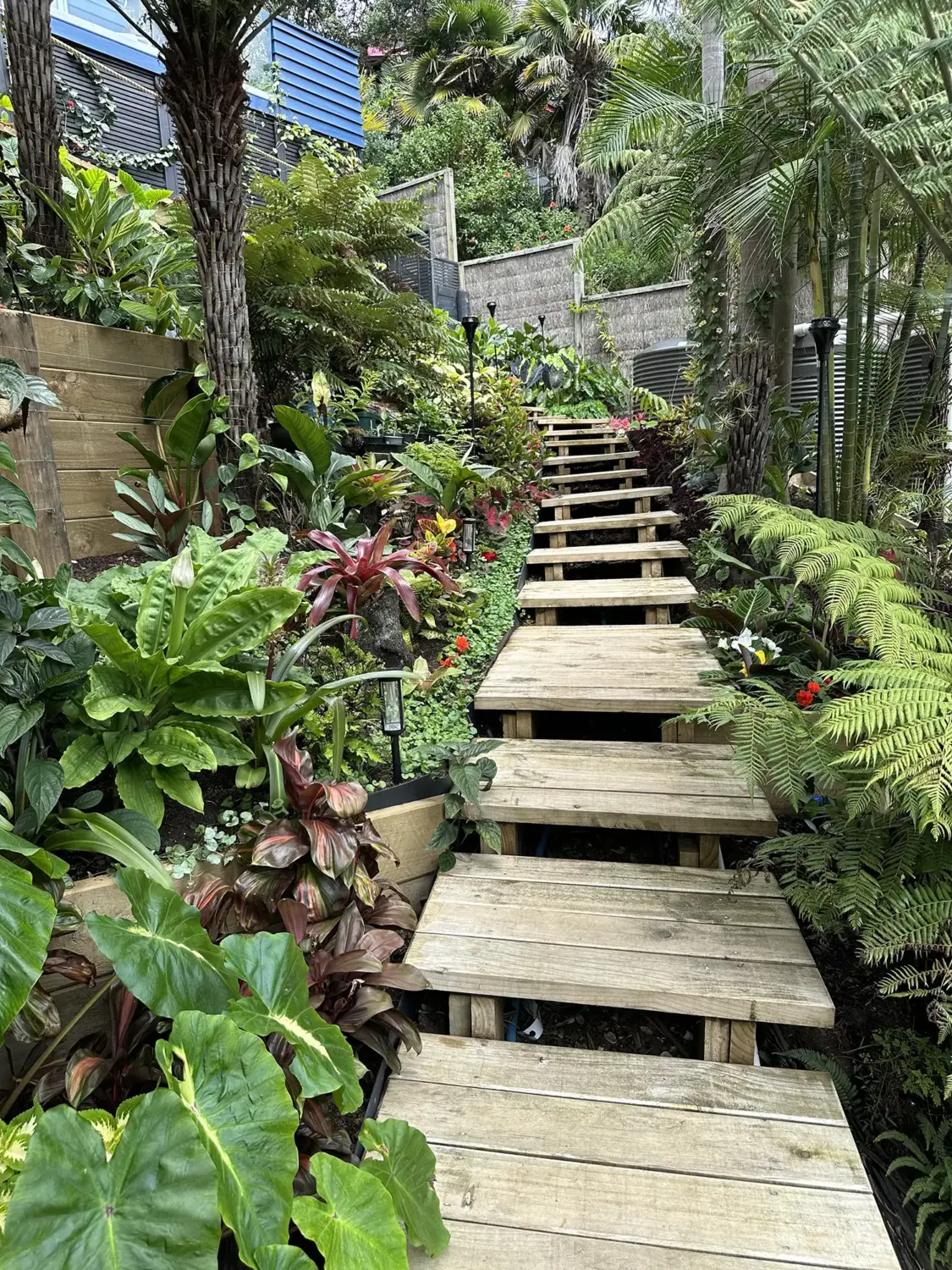
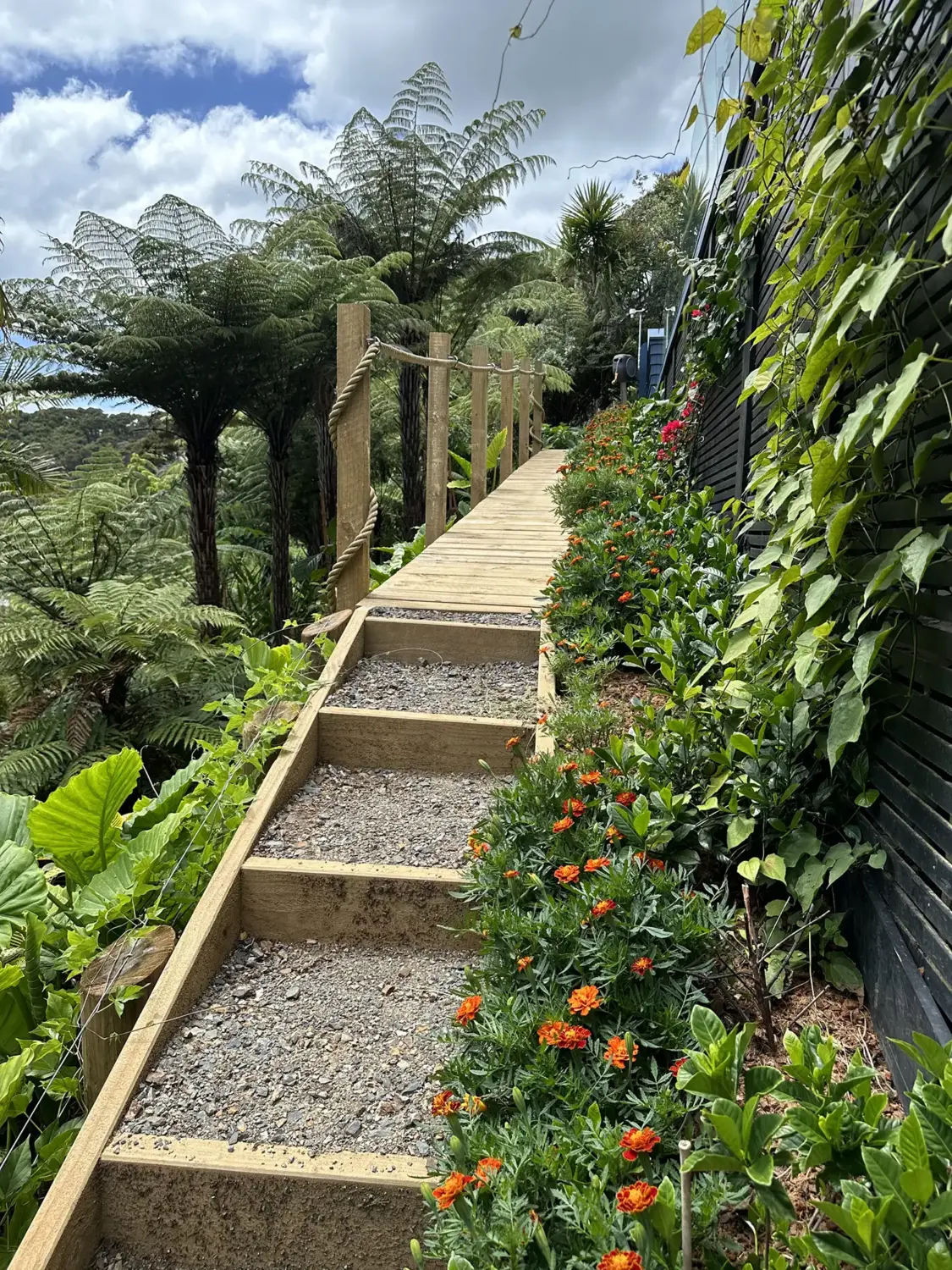
Sometimes the challenge is more complex. We recently worked on a waterfront property where the house sat at the top of a steep slope leading down to the water’s edge. The owners had this incredible waterfront location but no practical way to enjoy it. We designed a boardwalk and steps that wound through planted landscape, turning what could have been an awkward, steep trek into an easy and enjoyable journey. The destination (a large waterfront deck) became a remote entertainment zone with all the features needed for comfortable outdoor living. The journey itself became part of the experience, rather than an obstacle.
Good design also considers how indoor functions link with outdoor ones. Aligning a dining area with the kitchen makes serving food easy, while lounge areas can open out onto patios for relaxed gatherings. When these elements are planned from the start, the result is a space that feels connected, practical, and inviting.
Why Is Shade and Shelter Important in Outdoor Design?
Shade and shelter make the difference between a space that looks good and one that people actually enjoy using in summer. Without them, outdoor areas can be uncomfortably hot or too exposed to wind, which discourages people from spending time outside.
Designing for comfort means thinking about orientation, sun angles, and prevailing winds. Shade sails, pergolas, and carefully placed planting provide relief from the heat while adding visual interest. Windbreaks or screening can also create privacy and protection. By including these elements at the design stage, an entertaining space stays comfortable and inviting all season.
How Do You Balance Functionality with Style?
The best outdoor entertaining areas are designed to be both practical and beautiful. Functionality means having spaces for dining, cooking, and relaxing, while style ensures these areas feel cohesive and enjoyable to spend time in.
Here’s something we tell almost every client: consider how the space will be used and how often you’ll actually use it. There’s no point creating an elaborate outdoor kitchen if you’re only going to fire up the BBQ twice a summer. Equally, if you’re planning to live outside from November through March, your space needs to work hard for you.
The other principle we always emphasize is designing for longevity. Your outdoor area should age well, actually improving with age rather than deteriorating. That’s why we used high-quality hardwood timber for the Tamaterau deck. Years from now, as it weathers and develops character, it will look better, not worse. The same thinking applies to how the space relates to your home’s architecture and the overall site features. Good design feels like it belongs, not like it was tacked on as an afterthought.
A good design avoids clutter by defining zones that flow naturally into one another. Materials, colours, and planting are chosen not only for durability but also to create atmosphere. When functionality and style work hand in hand, the result is a space that looks impressive and makes hosting simple.
What Plants Work Best in Entertaining Areas?
Plants play a big role in setting the tone of an outdoor space, and Northland’s warmer climate gives us some excellent options. The best choices are those that provide colour, fragrance, or screening while staying easy to care for.
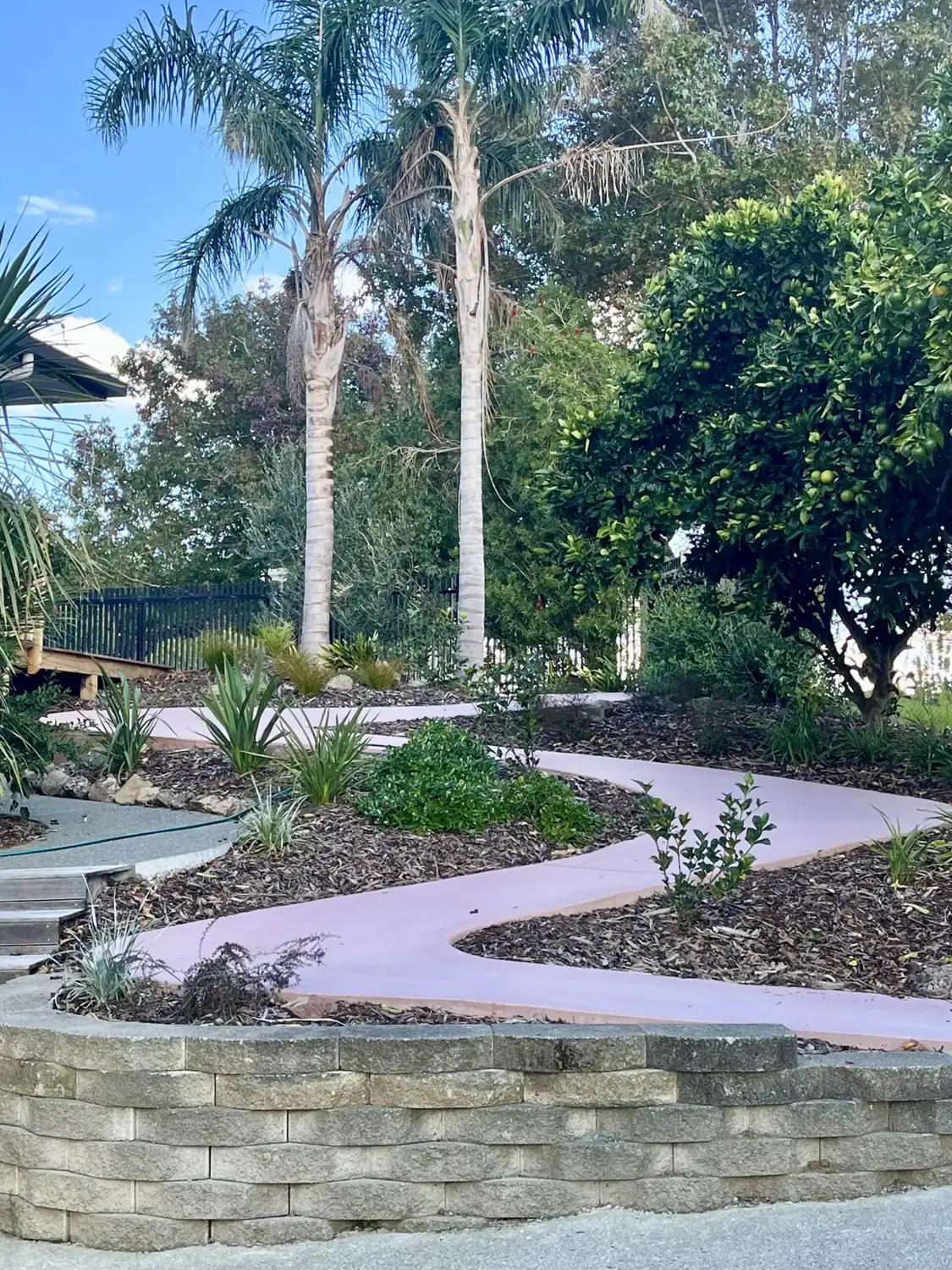
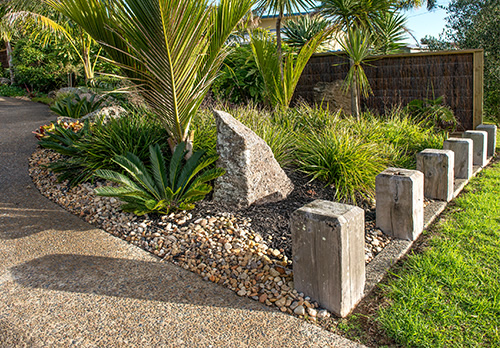
One of the advantages of working in Northland is our ability to use sub-tropical planting that complements the surrounding environment. Fast-growing plants that thrive in our climate can quickly create the lush, layered look that works so well with the native bush and coastal views many properties enjoy. Seasonal flowers can add vibrancy, evergreens offer structure, and climbers or hedges create privacy without taking up too much space.
Plant selection also needs to consider how the space will be used. Low-maintenance options keep the focus on entertaining rather than upkeep, while scented plants near seating areas can enhance the atmosphere. For Northland properties, it’s about choosing species that will flourish in our conditions without constant intervention, plants that contribute to that established, comfortable feel rather than needing endless attention.
How Do You Design for Low Maintenance and Durability?
A summer entertaining area should be enjoyable without creating extra work. Designing for low maintenance starts with choosing durable materials, weather-resistant finishes, and layouts that are easy to keep tidy.
Surfaces like paving, decking, and furniture should be able to withstand sun, rain, and heavy use. Planting can also be selected for resilience, reducing the need for constant watering or trimming. By planning with durability in mind, an outdoor space stays attractive and functional with less effort, leaving more time to relax and entertain.
The right design turns an outdoor space into a place people want to gather. Whether it’s creating flow between indoors and outdoors, adding shade, or choosing the right plants that thrive in Northland’s climate, each element works together to make summer entertaining effortless. If you’re ready to transform your garden into a space designed for living, get in touch with us today and let’s bring your ideas to life.